Edited by Azizi Powell
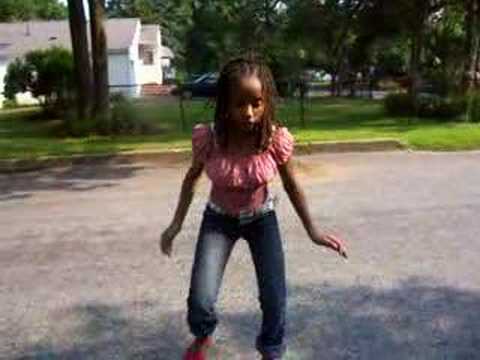
This pancocojams post presents general comments about foot stomping cheer demographics. This post also provides a list of city/state demographics for examples of foot stomping cheers that I have directly collected, or my daughter has directly collected. Also included in this list are cities/states for all the foot stomping cheers that I have found (as of this date) either online or off-line (in a vinyl record or in books), or that I have received electronically from others.
"Foot stomping cheers" are also called "cheers" or "steps" or other referents.
The content of this post is presented for folkloric, socio-cultural, and recreational purposes.
All content remains with their owners.
Thanks to all those who contributed examples that are included in this post.
-snip-
Click https://pancocojams.blogspot.com/2013/05/an-overview-of-foot-stomping-cheers.html for Part I of a three part pancocojams series on foot stomping cheers.
Also, click https://pancocojams.blogspot.com/2016/09/foot-stomping-cheers-alphabetical-list.html for Part I of a five part alphabetical listing of foot stomping cheers. The links to the other parts of this series are included in each post.
[added August 29, 2017] Click https://pancocojams.blogspot.com/2017/08/values-expressed-in-foot-stomping_24.html of this series for a few videos that show performance movements that are similar to foot stomping cheers.
****
PANCOCOJAMS EDITOR'S NOTES ABOUT DEMOGRAPHICS AND FOOT STOMPING CHEERS
[Latest revision September 13, 2017]
This pancocojams post provides a list of cheers and their cities/states (Note: This compilation only includes "early foot stomping cheers-from the late 1970s to 2000").
I'm sure that there were other foot stomping cheers in those cities in that time period that aren't listed in this post, and I'm sure that there are other cities/states that aren't listed in this post.
For the folkloric record, please add to this list by including the names of foot stomping cheers (and their lyrics) from this time period along with demographic information in the comment section for that pancocojams post.
Thanks!
-end of September 13, 2017 addition-
**
Most of the examples of foot stomping cheers that I've collected are from African American girls (mostly between the ages of 7-12 years) in the Pittsburgh, Pennsylvania area*. While I've included "the Pittsburgh Pensylvania area" as one of the city/states listed, this post mostly focuses on compiling a list of other United State city/states with pre-2000 examples of foot stomping cheers.
As of the date of this post's publication, I've not found any examples of foot stomping cheers (pre-2000 or after that year) in any country except the United States . If you know of any such examples, please add that information in the comment section below.
*In the context of this study, "Pittsburgh, Pennsylvania area" means many Pittsburgh neighborhoods that are considered "Black" or "mostly Black" neighborhoods" such as (my home location) East Liberty/Garfield, as well as Homewood, and the Northside.. In the context of this post, the Pittsburgh Pennsylvania area also includes certain nearby communities such as Braddock, Pennsylvania and Rankin, Pennsylvania. Also, in the context of this study, "Pittsburgh Pennsylvania area" also includes those examples that I collected from children (mostly African American girls ages 7-12 years) who attended two after school programs that I started in 1999 to around 2004-Alafia Children's Ensemble- (one in Braddock, Pennsylvania and one in Pittsburgh's East liberty/Garfield community where I lived and still live).
(Note that versions of the same cheers from Pittsburgh neighborhoods or from Pittsburgh area communities (such as Braddock, Pennsylvania and Rankin, Pennsylvania) are often at least somewhat different. However, some examples of certain cheers from the same neighborhood over decades might be the same or very similar.)
**
[Latest Revised Content -September 13, 2017]
Few online examples of foot stomping cheers (or any other children's recreational material) contain demographics, including geographical location. I'm including in the category of "online examples of children's recreational material" visitor submitted examples to my no longer available website cocojams.com - a multi-page cultural website that I founded and edited from 2000 to October 2014. In part because that website included an easy to fill out content submission form that needed no email address, it appears that many children and pre-teens submitted rhymes, cheers, and other children's recreational material on that site. Along with their first name and last name initial, cocojams.com contributors were asked to share their city/state or share their nationality if they lived outside the United States. To protect the contributors' privacy, I only included last name initials even for those contributors who gave their first and last name. Although I requested racial/ethnic and other demographic information, few contributors to my cocojams.com site included that information. The largest number of people who shared demographic information shared the city that they live in. The smallest number of people who shared demographic information shared information about their race/ethnicity (with "ethnicity" usually meaning Latino/a in the USA).
Mudcat folk music form is another website where contributors to children's recreational rhyme discussion threads (particularly guests) were asked to share demographic information, including race/ethnicity and nationality. From 2005 to 2011, I was a very active member of Mudcat (an online, United States based folk music discussion forum that also had a number of members from the United Kingdom, some members from Canada, Australia, and New Zealand, and a few members from elsewhere around the word, including one active member "Masato" from Japan who excelled in scholarly research. Regrettably, during my membership with Mudcat, except for a very brief period of time, I was the only acknowledged Black person who was a member of that forum, and there were very few other acknowledged members who were People of Color. Members of that relatively small discussion form didn't routinely publicly share their race/ethnicity or nationality, because the members of that forum already knew that information. However, that didn't mean that the considerable number of guests to and readers of Mudcat's children's rhymes discussion threads knew/know that information.
Nevertheless, a few guest comments on those Mudcat children's rhyme discussion threads include race/ethnicity demographics. On Mudcat that would sometimes happened after I or someone else added a comment that for the folkloric record we encourage guests to share their demographics-including race- along with examples of rhymes that they might post.
My sense was that people were (are) reluctant to acknowledge race/ethnicity because they thought (think) that if they did so, people would consider them to be racist. But I'm glad about that some people shared dempgraphic information including their race/ethnicity (and/or the race/ethnicity of the children/youth who performed the recreational compositions that they posted because I strongly believe that for the folkloric record, a contributor's race/ethnicity (as well as nationality) should be documented, because, among other reasons, race/ethnicity can be a factor in correctly understanding the words/phrases in those examples, and race/ethnicity can be a factor in how those examples are performed.
-end of September 13, 2017 revision-
****
MY NOTE ABOUT AN EXCERPT FROM KYRA D. GAUNT'S BOOK "THE GAMES BLACK GIRLS PLAY"
In her 2006 book The Games Black Girls Play..., Kyra D. Gaunt wrote
[page 183]
What was fascinating, which I was unable to research and include in this book, was how many of LaShonda's versions of cheers [she remembered cheers and not handclapping games or double-dutch rhymes] involved a great deal of individual improvisation within the collective expression of many chants. it was the first time that I had observed this phenomenon, the invention of vocal expression in the context of social performance of a girls' game. Does that suggest a change in the transmission or performance practice of girls games?....Was Chicago in the early 1980s somewhat a different locale of expression than outside Detroit, where I collected games in 1994-95? This can only be left for further study."
-snip-
I believe that Kyra D. Gaunt is correct in her speculation that what I refer to as "foot stomping cheers" ("cheers") and what she refers to as "cheers" mark a change in the transmission and performance of girls games in that these examples are a relatively new style of children's (mostly girls)' recreational activity.
I also believe that Kyra D. Gaunt was probably correct that for some reason, examples of these cheers were performed early on - i.e in the late 1970s and early 1980s- in certain African American communities throughout the United States and not in others. I'm sure that one way these cheers traveled throughout the nation before the internet, was by people (family members/friends) sharing them with others. For example, in the 1990s, a version of the Washington D. C. cheer "Chocolate City, came to Pittsburgh, Pennsylvania via a girl who attended a Pittsburgh area summer camp while she was visiting her Pittsburgh cousins.
That said, it seems very likely to me that there were foot stomping cheer examples in cities that aren't included in this geographical demographic list, and I think that there were probably many more cheers in the cities that are named in this list than the ones that I've documented.
For the folkloric record, if you know any versions of these cheers, please add them in the comment section below - and don't forget to add demographics!
****
LIST OF CITY (AND/OR STATE) FOR EARLY (1970S-2000)
he city/state names are given in alphabetical order. With the exception of examples from "Pittsburgh Pennsylvania area", the titles of the foot stomping examples that I have collected or found online etc.
Because my "collection" contains so many examples from Pittsburgh, Pennsylvania (from the mid 1980s to around 2008), I've chosen not to add the names of those examples under the Pittsburgh, PA. area entry. Instead, when an example from another city is the same or similar to one or more versions from the Pittsburgh, Pennsylvania area, I've noted that with these words in parenthesis (example/ multiple examples same/similar in Pittsburgh, Pennsylvania area). When versions of that examples are also found on other examples with no demographic I've added this note: (multiple examples same/similar in Pittsburgh, Pennsylvania area and elsewhere throughout the United States).
Click https://pancocojams.blogspot.com/2016/09/foot-stomping-cheers-alphabetical-list.html for Part I of a five part alphabetical listing of foot stomping cheers that includes these city/state demographics, including those for Pittsburgh, Pennsylvania area. The hyperlinks for the other posts in that series are given on each posts in that series.
These entries are given in alphabetical order. The entries include the city (and/or state) name, the name/s of the examples, the way the example/s were collected, and the date of collection/retrieval. Some other editorial notes may be included after some of these entries. I've also added the words to the three examples that I've found which are from the late 1970s.
A, B
Ann, Arbor, Michigan
"Oolay Oolay"* in The Games Black Girls Play by Kyra D. Gaunt, (page 77) contributor Tomika and Laura, mid 1990s
-snip-
This is a version of the cheer "Hula Hula", (multiple same/similar examples in Pittsburgh, Pennsylvania area and elsewhere throughout the United States)
**
Atlantic City, New Jersey
"Introduce yourself" [late 1970s, Atlantic City, New Jersey] ; (multiple same/similar examples in Pittsburgh, Pennsylvania area and elsewhere throughout the United States)
from Joan C.(Anglo-American female ; chanted by Black, Latino, and White girls at Catholic High School in Atlantic City, New Jersey, late 1970s; electronic message to Azizi Powell from Mudcat folk music forum email; 2/11/2007
-snip-
This is one of the earliest examples of a foot stomping cheer that I've found (along with the (Washington, D.C. "Mother Hippletoe examples from 1976 that are noted below). I's ironic that I was given this example because Atlantic City, New Jersey is my home town, and before I received that email from Joan, I didn't know that she was also an active member of the Mudcat folk music forum. After that email, I tried to exchange other emails, but never received another email from her. I've added the words to this version of "Introduce Yourself" because it is one of the earliest examples of foot stomping cheers that I've found:
"Hey girl, hey you, introduce yourself. Introduce yourself."
Then each individual girl says a rhyme about themselves, like,
"My name is Joan (group says "check") I'm from AC ("check") I come to say ("check") Don't mess with me ("Check it out")
-Joan C., late 1970s, Atlantic City, New Jersey
**
Birmingham, Alabama; 1990s
�Angels Go Swinging�, posted in cocojams.com (my no longer active cultural website)
(version of "Hollywood"; (multiple same/similar examples in Pittsburgh, Pennsylvania area and elsewhere throughout the United States)
****
C, D
Chicago, Illinois
[version] "Tell It, Tell it" (also known as "TeLl It Like It Is"
Chrystal Smith, comment dated July 14, 2017 (comment in discussion thread for vlog https://www.youtube.com/watch?v=KfzHL_1PdbY
Let's Discuss: Black Girl Childhood Hand Games and Sing Songs")
**
Also, from Chicago, Illinois, (early 1980s) noted in The Games Black Girls Play by Kyra D. Gaunt; contributor: LaShonda (pages 182)
"Planet Rock"
**
"Hollywood Swinging"; (multiple same/similar examples in Pittsburgh, Pennsylvania area and elsewhere throughout the United States)
**
"Take Your Time"
**
Cleveland, Ohio
Shelly H. (African American female, Cleveland, Ohio, mid 1980s) �Check�
**
Denver, Colorado
"Ola Ola"* in The Games Black Girls Play by Kyra D. Gaunt, (page 78) contributor Arielle [1995]
-snip-
This is a version of the cheer "Hula Hula", (multiple same/similar examples in Pittsburgh, Pennsylvania area and elsewhere throughout the United States)
****
E, F
Elkhart, Indiana:
"Introduce Yourself Roll Call"; from Sonjala; memories of the late 1970s and early 1980s; collected by Azizi Powell (multiple same/similar examples in Pittsburgh, Pennsylvania area and elsewhere throughout the United States)
"Tab" from Sonjala; memories of the late 1970s and early 1980s; collected by Azizi Powell
-snip-
Elkhart, Indiana is about two hours by car from Chicago, Illinois.
****
G, H,
Houston, Texas
From Apples On A Stick: The Folklore Of Black Children by Barbara Michels and Bettye White (1983; p. 14);
"Hollywood Rock Swinging"- (multiple examples same/similar in Pittsburgh, Pennsylvania area and elsewhere throughout the United States).
**
"Hula Hula"- (multiple examples same/similar in Pittsburgh, Pennsylvania area and elsewhere throughout the United States).
****
I, J
****
K, L
Los Angeles, California
Tether ball (three examples)
1) Milan W; November 18, 2009, cocojams.com
-snip-
Milan W added this comment to her version of this cheer
"Little black girls at Windsor Hills Elementary School in Los Angeles, CA during the early 1990s chanted this rhythmic taunt in a circle on the playground"
**
2) bitsy196; http://www.greekchat.com/gcforums/showthread.php?t=4123&page=4 ; �remember when��-06-25-2003
-snip-
bitsy196 prefaced this example with this comment: ..."I remember one that surprisingly (sp?) has not been said.I grew up in LA and I am sure this made across the US"...
**
3) Nikkole Salter (Los Angeles, California), comment in discussion thread for vlog https://www.youtube.com/watch?v=KfzHL_1PdbY "Let's Discuss: Black Girl Childhood Hand Games and Sing Songs")"
also
"Candy Girl" posted by bitsy196 in greekchant.com site whose link is given above.
****
M. N.
New York, New York
"We are the Ridgewood girls", -Yasmin H., (Latina), via email to cocojams.com, 2/25/04 (memories of East Brooklyn, New York, in the late 1980s.)
****
O, P
Philadelphia, Pennsylvania
From Recess Battles: Playing Fighting, and Storytelling by Anna R. Beresin (University Press of Mississippi, Jackson, 2010, page 104-105, in the section of that book whose sub-title is "Steps"), African American girls, Philadelphia, Pennsylvania,)
"Fly Girl" (1999) (multiple same/similar examples in Pittsburgh, Pennsylvania area and elsewhere throughout the United States)
**
"Hollywood" (1992) (multiple same/similar examples in Pittsburgh, Pennsylvania area and elsewhere throughout the United States)
**
"I Work" [1992]
**
"Pump It Up" (1992) (multiple same/similar examples in Pittsburgh, Pennsylvania area and elsewhere throughout the United States)
**
"Shoo shoo Sharida" (1992)
**
"Telephone" (1992) (A similar cheer is included in a Pittsburgh, Pennsylvania area version of "Cheerleader"; also examples of "Telephone" found elsewhere throughout the United States)
**
Pittsburgh, Pennsylvania (and some nearby communities
-snip-
Most of the examples of cheers in my collection are from the Pittsburgh, Pennsylvania area, including those which are noted as such in the parenthesis in this post. Here's a few other cheers that are found in Pittsburgh, Pennsylvania area which are also found in at least one other African American community if not in more than one other African American communities throughout the USA:
"Bang Bang Choo Choo Train"
-snip-
"Bang Bang Choo Choo Train" is a VERY widely known recreational composition that is performed as a hand clap rhyme and as a cheerleader cheer. Both the hand clap rhyme versions and cheer versions have basically the same text, but it I believe that "Bang Bang Choo Choo Train" is usually performed by some Black Americans and most other Americans as a unison chanted hand clap routine. Click https://pancocojams.blogspot.com/2015/08/bang-bang-choo-choo-train-rhyme-cheer.html for more information about this rhyme/cheer.
**
"Candy Girl"
-snip-
This was posted as a cheer (Los Angeles, Cal.) in the Black Greek sorority women's "remember when" discussion and was also mentioned as a handclap rhyme in The Games Black Girls Play
**
"Disco"
-snip-
This cheer includes the line " what you gonna do when they come for you?" I collected it in Pittsburgh and it was also posted to cocojams.com (no location given). Of course, the person posted it could also have been from Pittsburgh area.
**
"Get Down"
-snip-
In this cheer, the group commands a soloist to "show me how you get down". That line is also given as "Show me how to get down". ("Get down" meaning - to dance really well, to dance in a funky, seductive manner.) I first documented this cheer in the mid 1980s from my daughter and her friends. I collected examples of this cheer in Pittsburgh with almost the same exact words up to around 2006 (I stopped directly collecting recreational rhymes around 2008). An example of this cheer with similar wording was posted on cocojams.com with no location.
**
"Really"
-snip-
This cheer was "really" popular in Pittsburgh, Pennsylvania area in the early 1990s. I've collected versions from the greekchat.com website, from lipstick alley.com, and from cocojams.com (all without locations and decade when the cheer was performed).
**
[added August 29, 2017]
I collected foot stomping cheer versions of "Gigalo" in Pittsburgh, Pennsylvania ("Gigalo" is also performed as a hand clap rhyme). Here's a large excerpt of a comment that I wrote in November 25, 2007 on http://mudcat.org/thread.cfm?threadid=63097 Folklore: Do kids still do clapping rhymes? -Note: The words in brackets are what I added today to help clarify what I meant by what I wrote in 2007.
[...]
"GIGALO
All:
Gig ah lo-o
Gig a lo-o
Gig ah lo-o
Gig gig a lo-o
Group:
Hey, Kayla *
Kayla:
What?
Group:
Are you ready to gig?
Kayla:
Gig what?
Group:
Gigalo
Kayla:
My hands up high
My feet down low
And this is the way
I gig a lo
Group:
Her hands up high
Her feet down low
And this is the way she gigalos
* substitute the soloist's name or nickname
{repeat from the beginning with the next soloist, and continue until everyone in the group has a turn as soloist}
Girls stand in a horizontal line. While chanting, they step to a percussive, continual stomp clap/ stomp stomp/clap beat. When the girl who is the soloist responds "What?", she says it with attitude {like "Why are you bothering me to ask a question?"}. When she says "My hands up high my feet down low" She raises her hands and sashays down to the ground, in a sensual manner. When she says "This is the way I gigalo", she does a fancy step to the beat. The group then imitates her foot movement. The cheer then repeats again with the next soloist whose name is called and she does her soloist step.
Btw, recently, I've seen the soloist move to the front of the horizontal line when it's her turn to do her soloist {this does not mean moving in front of the other performers in the center of the line-but just moving in front of where she was standing}. When her soloist turn ends, she moves back to the line. Also btw, the girls don't stand in consecutive order 1 through 4 for instance. And the order of soloist {who is first, second, etc often depends on who calls out those numbers first at the beginning of this informal "play" activity}.
[Similar to] handclap rhymes, performers [are] {usually but not always girls as young as 5 years and usually no more than 12 years old}. [The girls basically] stand in [the same] place. The emphasis is on chanting while executing hand clap and hand slap partner routines. These routines can also be done with three people or four {two sets of two partners}. There are also larger group handclaps, but those are often lightly competitive while partner/three and four person handclaps aren't.
In contrast, foot stomping cheers are all about the creation of bass sounding percussive sounds made by the feet and also the hands and body patting. These synchronized, chreographed routines are performed by girls about the same age as those doing handclaps, but usually at the upper end of that age group. While foot stomping routines include handclapping, there are no partners-you clap your own hands and never touch the body of anyone else. The performers {like handclap routines, usually girls} basically stand in place or if they do move, they don't move far from their starting place, and they quickly return back to it.
These foot stomping routines are very much like the African American art of steppin."...
****
Q, R
****
S, T
San Francisco, California
Janice, () �Introduce yourself�(multiple examples the same/similar in Pittsburgh, Pennsylvania area)
****
U, V
****
W, X
Washington, D.C
"Cheering Is my Game" -1976 Washington, D. C. school girls, in Band 3 "Cheerleaders" of 1978 vinyl record "Mother Hippletoe"; (multiple examples the same/similar in Pittsburgh, Pennsylvania area)
and
"Hollywood Now Swingin/Dynomite" -1976 Washington, D. C. school girls, in Band 3 "Cheerleaders" of 1978 vinyl record "Mother Hippletoe" ("Hollywood Swinging"- (multiple examples the same/similar in Pittsburgh, Pennsylvania area)
-snip-
Band 3 "Cheerleading" of the 1978 vinyl record "Mother Hippletoe" includes four examples of what the author of the record notes calls "cheers". Two of these examples* ("Cheering Is My Game" and "Hollywood Keeps Swingin/Dynomite") have the textual structure that I consider a signature characteristic of "foot stomping cheers". These are the earliest examples of foot stomping cheers that I've found. I've collected multiple examples of both of those cheers among African American in various parts of the United States.
Here are the words to Cheering Is My Game:
Dn Dn Dn Dn Dn (Twice)
CALL: Barbara. Barbara is my name.
RESPONSE: Dn Dn Dn Dn Dn (similarly)
Cheering is my game.
Freddy. Freddy was my man.
But Ken is my main man.
Dn Dn Dn Dn Dn (Twice)
Cheer continues until each girl announces her name and her boyfriend�s name.
-"Old Mother Hippletoe, Rural and Urban Children's Songs"; Barbara Borum and other Washington, D.C., schoolgirls, vocals.
-snip-
"Cheering Is My Game" is an early version of the "Cheerleader" cheer. I collected a rather basic mid 1980s "Cheerleader" from Pittsburgh, Pennsylvania and a much longer version of "Cheerleader" also in the mid 1980s from from Rankin, Pennsylvania which is about twenty minutes from one part of Pittsburgh, Pennsylvania.
"Cheerleader" is a form of the "introduce yourself" subset of foot stomping cheers. The first Bring It On high school cheerleader movie (in 2000) featured a couple of "introduce yourself/"roll call" cheers. The third movie in that franchise, Bring It On:All Or Nothing (2006), includes "Shabooya Roll Call", a VERY widely known example of an "introduce yourself". In the cafeteria scene ofn that movie, the high school cheerleaders performed an (albeit) exaggerated form of a step routine to the "Shaboya Roll Call" cheer. However, it should be noted that a version of "Shabooya Roll Call" was chanted by African American men and boys in a scene in Spike Lee's fictional 1996 Get On The Bus movie about the Million Man March on Washington, D.C.
For the record, a young Black woman I met in the Washington, D. C. area told me that she and other teenagers "said a cheer" that had a word like "Shabooya" before Spike Lee's movie, but she that was the only thing she remembered about that cheer.
Click https://pancocojams.blogspot.com/2016/06/the-right-rhyming-pattern-for-shabooya.html for a pancocojams post about "Shabooya Roll Call".
-snip-
I initially attributed the "Shabooya Roll Call" cheer to the first Bring It On movie in 2000. My apologies for that mistake.
**
Here are the words to Hollywood Now Swingin / Dynomite
HOLLYWOOD NOW SWINGING/DYNOMITE
Hollywood now swingin'! (4 times)
CALL: Name is Nita.
RESPONSE: Hollywood now swingin'!
Similarly
I know how to swing.
Everytime I swing.
Stevie come around.
CALL: He popped me once!
He popped me twice!
All I felt was -dynomite!
RESPONSE: Dynomite, dynomite! (Twice)
Dynomite!
CALL: Here she is.
RESPONSE: Dynomite!
Similarly
Foxy Brown!
You mess with me,
I'll shoot you down!
Down, down,
To the ground,
Up, up,
CALL: Just out of luck!
RESPONSE: Dynomite, dynomite! (Twice)
-Barbara Borum and other Washington, D.C. schoolgirls, recorded in 1976 in Washington, D. C.; record notes by Kate Rinzler, "Old Mother Hippletoe, Rural and Urban Children's Songs"
-snip-
This versions combines two stand alone cheers. The "Hollywood Keeps Swingin" cheer is the one that is very widely found throughout the USA.
**
Other Washington D.C. examples:
"J. J. Cool Aid"*, from Anglo-American female living in Pittsburgh, Pennsylvania who indicated that she grew up in predominately Black neighborhood of Washington, DC; performed this in the 1980s [written survey at Pittsburgh health care agency, Azizi Powell collected Collected by Azizi Powell, 1999 (Game song/Cheer survey of co-workers, Family Health Council, Pittsburgh, PA.) (one example the same/similar in Pittsburgh, Pennsylvania area)
-snip-
*This was that women's spelling of that title. The Pittsburgh example was "Jay Jay Kukalay". I believe the the source of these examples is the Ghanaian children's song "Kye Kye Kule" often given as Che Che Kulay" or similar spellings.
**
"Chocolate City", collected in Pittsburgh, Pennsylvania Lillian Taylor camp from a girl who lives in Washington D>C and attended Lillian Taylor camp (Pittsburgh area) with her Pittsburgh cousin; in 1990 [Lillian Taylor Camp was attended by mostly Black girls & boys ages 5-12 years from various neighborhoods throughout Pittsburgh, Pennsylvania. My daughter (TMP) was a camp counselor who audio-taped a number of cheers that the girls knew (She didn't teach these cheers to them).
****
Y, Z
Ypsilanti, Michigan
"Jigalow"
In The Games Black Girls Play by Kyra D. Gaunt, (page 80, 82) contributors: Jasmine and Stephanie, mid 1990s [?]
-snip-
This version of "Jigalow" combines "Jigalow" with "Introduce Yourself". The examples of "Jigalow" ("Gigalo") that I collected from the Pittsburgh, Pennsylvania area are performed as handclap/imitative rhymes. "Jigalow" rhyme/cheer appears to be widely known in the USA. Versions of "Introduce Yourself" cheer are also widely known throughout the USA.
****
OTHER DEMOGRAPHICS (STATE) FOR EARLY (1970S-2000)
Eastern North Carolina.
"L-O-V-E" (several examples the same/similar in Pittsburgh, Pennsylvania area)
-snip-
This example was posted on my cocojams.com website but I neglected to save the contributor's name and date that it was aadded to that site. The date had to be in or before 2014. Here's the comment that was included with that example:
"I am a 25 year old African American woman from Eastern North Carolina.
**
Also, note that in her 2006 book The Games That Black Girls Play, Kyra Gaunt writes that "cheers" are called "scolds".
****
Thanks for visiting pancocojams.
Visitor comments are welcome.
"The section on the chant L-O-V-E caught my attention we used to do this when I was younger."
This pancocojams post presents general comments about foot stomping cheer demographics. This post also provides a list of city/state demographics for examples of foot stomping cheers that I have directly collected, or my daughter has directly collected. Also included in this list are cities/states for all the foot stomping cheers that I have found (as of this date) either online or off-line (in a vinyl record or in books), or that I have received electronically from others.
"Foot stomping cheers" are also called "cheers" or "steps" or other referents.
The content of this post is presented for folkloric, socio-cultural, and recreational purposes.
All content remains with their owners.
Thanks to all those who contributed examples that are included in this post.
-snip-
Click https://pancocojams.blogspot.com/2013/05/an-overview-of-foot-stomping-cheers.html for Part I of a three part pancocojams series on foot stomping cheers.
Also, click https://pancocojams.blogspot.com/2016/09/foot-stomping-cheers-alphabetical-list.html for Part I of a five part alphabetical listing of foot stomping cheers. The links to the other parts of this series are included in each post.
[added August 29, 2017] Click https://pancocojams.blogspot.com/2017/08/values-expressed-in-foot-stomping_24.html of this series for a few videos that show performance movements that are similar to foot stomping cheers.
****
PANCOCOJAMS EDITOR'S NOTES ABOUT DEMOGRAPHICS AND FOOT STOMPING CHEERS
[Latest revision September 13, 2017]
This pancocojams post provides a list of cheers and their cities/states (Note: This compilation only includes "early foot stomping cheers-from the late 1970s to 2000").
I'm sure that there were other foot stomping cheers in those cities in that time period that aren't listed in this post, and I'm sure that there are other cities/states that aren't listed in this post.
For the folkloric record, please add to this list by including the names of foot stomping cheers (and their lyrics) from this time period along with demographic information in the comment section for that pancocojams post.
Thanks!
-end of September 13, 2017 addition-
**
Most of the examples of foot stomping cheers that I've collected are from African American girls (mostly between the ages of 7-12 years) in the Pittsburgh, Pennsylvania area*. While I've included "the Pittsburgh Pensylvania area" as one of the city/states listed, this post mostly focuses on compiling a list of other United State city/states with pre-2000 examples of foot stomping cheers.
As of the date of this post's publication, I've not found any examples of foot stomping cheers (pre-2000 or after that year) in any country except the United States . If you know of any such examples, please add that information in the comment section below.
*In the context of this study, "Pittsburgh, Pennsylvania area" means many Pittsburgh neighborhoods that are considered "Black" or "mostly Black" neighborhoods" such as (my home location) East Liberty/Garfield, as well as Homewood, and the Northside.. In the context of this post, the Pittsburgh Pennsylvania area also includes certain nearby communities such as Braddock, Pennsylvania and Rankin, Pennsylvania. Also, in the context of this study, "Pittsburgh Pennsylvania area" also includes those examples that I collected from children (mostly African American girls ages 7-12 years) who attended two after school programs that I started in 1999 to around 2004-Alafia Children's Ensemble- (one in Braddock, Pennsylvania and one in Pittsburgh's East liberty/Garfield community where I lived and still live).
(Note that versions of the same cheers from Pittsburgh neighborhoods or from Pittsburgh area communities (such as Braddock, Pennsylvania and Rankin, Pennsylvania) are often at least somewhat different. However, some examples of certain cheers from the same neighborhood over decades might be the same or very similar.)
**
[Latest Revised Content -September 13, 2017]
Few online examples of foot stomping cheers (or any other children's recreational material) contain demographics, including geographical location. I'm including in the category of "online examples of children's recreational material" visitor submitted examples to my no longer available website cocojams.com - a multi-page cultural website that I founded and edited from 2000 to October 2014. In part because that website included an easy to fill out content submission form that needed no email address, it appears that many children and pre-teens submitted rhymes, cheers, and other children's recreational material on that site. Along with their first name and last name initial, cocojams.com contributors were asked to share their city/state or share their nationality if they lived outside the United States. To protect the contributors' privacy, I only included last name initials even for those contributors who gave their first and last name. Although I requested racial/ethnic and other demographic information, few contributors to my cocojams.com site included that information. The largest number of people who shared demographic information shared the city that they live in. The smallest number of people who shared demographic information shared information about their race/ethnicity (with "ethnicity" usually meaning Latino/a in the USA).
Mudcat folk music form is another website where contributors to children's recreational rhyme discussion threads (particularly guests) were asked to share demographic information, including race/ethnicity and nationality. From 2005 to 2011, I was a very active member of Mudcat (an online, United States based folk music discussion forum that also had a number of members from the United Kingdom, some members from Canada, Australia, and New Zealand, and a few members from elsewhere around the word, including one active member "Masato" from Japan who excelled in scholarly research. Regrettably, during my membership with Mudcat, except for a very brief period of time, I was the only acknowledged Black person who was a member of that forum, and there were very few other acknowledged members who were People of Color. Members of that relatively small discussion form didn't routinely publicly share their race/ethnicity or nationality, because the members of that forum already knew that information. However, that didn't mean that the considerable number of guests to and readers of Mudcat's children's rhymes discussion threads knew/know that information.
Nevertheless, a few guest comments on those Mudcat children's rhyme discussion threads include race/ethnicity demographics. On Mudcat that would sometimes happened after I or someone else added a comment that for the folkloric record we encourage guests to share their demographics-including race- along with examples of rhymes that they might post.
My sense was that people were (are) reluctant to acknowledge race/ethnicity because they thought (think) that if they did so, people would consider them to be racist. But I'm glad about that some people shared dempgraphic information including their race/ethnicity (and/or the race/ethnicity of the children/youth who performed the recreational compositions that they posted because I strongly believe that for the folkloric record, a contributor's race/ethnicity (as well as nationality) should be documented, because, among other reasons, race/ethnicity can be a factor in correctly understanding the words/phrases in those examples, and race/ethnicity can be a factor in how those examples are performed.
-end of September 13, 2017 revision-
****
MY NOTE ABOUT AN EXCERPT FROM KYRA D. GAUNT'S BOOK "THE GAMES BLACK GIRLS PLAY"
In her 2006 book The Games Black Girls Play..., Kyra D. Gaunt wrote
[page 183]
What was fascinating, which I was unable to research and include in this book, was how many of LaShonda's versions of cheers [she remembered cheers and not handclapping games or double-dutch rhymes] involved a great deal of individual improvisation within the collective expression of many chants. it was the first time that I had observed this phenomenon, the invention of vocal expression in the context of social performance of a girls' game. Does that suggest a change in the transmission or performance practice of girls games?....Was Chicago in the early 1980s somewhat a different locale of expression than outside Detroit, where I collected games in 1994-95? This can only be left for further study."
-snip-
I believe that Kyra D. Gaunt is correct in her speculation that what I refer to as "foot stomping cheers" ("cheers") and what she refers to as "cheers" mark a change in the transmission and performance of girls games in that these examples are a relatively new style of children's (mostly girls)' recreational activity.
I also believe that Kyra D. Gaunt was probably correct that for some reason, examples of these cheers were performed early on - i.e in the late 1970s and early 1980s- in certain African American communities throughout the United States and not in others. I'm sure that one way these cheers traveled throughout the nation before the internet, was by people (family members/friends) sharing them with others. For example, in the 1990s, a version of the Washington D. C. cheer "Chocolate City, came to Pittsburgh, Pennsylvania via a girl who attended a Pittsburgh area summer camp while she was visiting her Pittsburgh cousins.
That said, it seems very likely to me that there were foot stomping cheer examples in cities that aren't included in this geographical demographic list, and I think that there were probably many more cheers in the cities that are named in this list than the ones that I've documented.
For the folkloric record, if you know any versions of these cheers, please add them in the comment section below - and don't forget to add demographics!
****
LIST OF CITY (AND/OR STATE) FOR EARLY (1970S-2000)
he city/state names are given in alphabetical order. With the exception of examples from "Pittsburgh Pennsylvania area", the titles of the foot stomping examples that I have collected or found online etc.
Because my "collection" contains so many examples from Pittsburgh, Pennsylvania (from the mid 1980s to around 2008), I've chosen not to add the names of those examples under the Pittsburgh, PA. area entry. Instead, when an example from another city is the same or similar to one or more versions from the Pittsburgh, Pennsylvania area, I've noted that with these words in parenthesis (example/ multiple examples same/similar in Pittsburgh, Pennsylvania area). When versions of that examples are also found on other examples with no demographic I've added this note: (multiple examples same/similar in Pittsburgh, Pennsylvania area and elsewhere throughout the United States).
Click https://pancocojams.blogspot.com/2016/09/foot-stomping-cheers-alphabetical-list.html for Part I of a five part alphabetical listing of foot stomping cheers that includes these city/state demographics, including those for Pittsburgh, Pennsylvania area. The hyperlinks for the other posts in that series are given on each posts in that series.
These entries are given in alphabetical order. The entries include the city (and/or state) name, the name/s of the examples, the way the example/s were collected, and the date of collection/retrieval. Some other editorial notes may be included after some of these entries. I've also added the words to the three examples that I've found which are from the late 1970s.
A, B
Ann, Arbor, Michigan
"Oolay Oolay"* in The Games Black Girls Play by Kyra D. Gaunt, (page 77) contributor Tomika and Laura, mid 1990s
-snip-
This is a version of the cheer "Hula Hula", (multiple same/similar examples in Pittsburgh, Pennsylvania area and elsewhere throughout the United States)
**
Atlantic City, New Jersey
"Introduce yourself" [late 1970s, Atlantic City, New Jersey] ; (multiple same/similar examples in Pittsburgh, Pennsylvania area and elsewhere throughout the United States)
from Joan C.(Anglo-American female ; chanted by Black, Latino, and White girls at Catholic High School in Atlantic City, New Jersey, late 1970s; electronic message to Azizi Powell from Mudcat folk music forum email; 2/11/2007
-snip-
This is one of the earliest examples of a foot stomping cheer that I've found (along with the (Washington, D.C. "Mother Hippletoe examples from 1976 that are noted below). I's ironic that I was given this example because Atlantic City, New Jersey is my home town, and before I received that email from Joan, I didn't know that she was also an active member of the Mudcat folk music forum. After that email, I tried to exchange other emails, but never received another email from her. I've added the words to this version of "Introduce Yourself" because it is one of the earliest examples of foot stomping cheers that I've found:
"Hey girl, hey you, introduce yourself. Introduce yourself."
Then each individual girl says a rhyme about themselves, like,
"My name is Joan (group says "check") I'm from AC ("check") I come to say ("check") Don't mess with me ("Check it out")
-Joan C., late 1970s, Atlantic City, New Jersey
**
Birmingham, Alabama; 1990s
�Angels Go Swinging�, posted in cocojams.com (my no longer active cultural website)
(version of "Hollywood"; (multiple same/similar examples in Pittsburgh, Pennsylvania area and elsewhere throughout the United States)
****
C, D
Chicago, Illinois
[version] "Tell It, Tell it" (also known as "TeLl It Like It Is"
Chrystal Smith, comment dated July 14, 2017 (comment in discussion thread for vlog https://www.youtube.com/watch?v=KfzHL_1PdbY
Let's Discuss: Black Girl Childhood Hand Games and Sing Songs")
**
Also, from Chicago, Illinois, (early 1980s) noted in The Games Black Girls Play by Kyra D. Gaunt; contributor: LaShonda (pages 182)
"Planet Rock"
**
"Hollywood Swinging"; (multiple same/similar examples in Pittsburgh, Pennsylvania area and elsewhere throughout the United States)
**
"Take Your Time"
**
Cleveland, Ohio
Shelly H. (African American female, Cleveland, Ohio, mid 1980s) �Check�
**
Denver, Colorado
"Ola Ola"* in The Games Black Girls Play by Kyra D. Gaunt, (page 78) contributor Arielle [1995]
-snip-
This is a version of the cheer "Hula Hula", (multiple same/similar examples in Pittsburgh, Pennsylvania area and elsewhere throughout the United States)
****
E, F
Elkhart, Indiana:
"Introduce Yourself Roll Call"; from Sonjala; memories of the late 1970s and early 1980s; collected by Azizi Powell (multiple same/similar examples in Pittsburgh, Pennsylvania area and elsewhere throughout the United States)
"Tab" from Sonjala; memories of the late 1970s and early 1980s; collected by Azizi Powell
-snip-
Elkhart, Indiana is about two hours by car from Chicago, Illinois.
****
G, H,
Houston, Texas
From Apples On A Stick: The Folklore Of Black Children by Barbara Michels and Bettye White (1983; p. 14);
"Hollywood Rock Swinging"- (multiple examples same/similar in Pittsburgh, Pennsylvania area and elsewhere throughout the United States).
**
"Hula Hula"- (multiple examples same/similar in Pittsburgh, Pennsylvania area and elsewhere throughout the United States).
****
I, J
****
K, L
Los Angeles, California
Tether ball (three examples)
1) Milan W; November 18, 2009, cocojams.com
-snip-
Milan W added this comment to her version of this cheer
"Little black girls at Windsor Hills Elementary School in Los Angeles, CA during the early 1990s chanted this rhythmic taunt in a circle on the playground"
**
2) bitsy196; http://www.greekchat.com/gcforums/showthread.php?t=4123&page=4 ; �remember when��-06-25-2003
-snip-
bitsy196 prefaced this example with this comment: ..."I remember one that surprisingly (sp?) has not been said.I grew up in LA and I am sure this made across the US"...
**
3) Nikkole Salter (Los Angeles, California), comment in discussion thread for vlog https://www.youtube.com/watch?v=KfzHL_1PdbY "Let's Discuss: Black Girl Childhood Hand Games and Sing Songs")"
also
"Candy Girl" posted by bitsy196 in greekchant.com site whose link is given above.
****
M. N.
New York, New York
"We are the Ridgewood girls", -Yasmin H., (Latina), via email to cocojams.com, 2/25/04 (memories of East Brooklyn, New York, in the late 1980s.)
****
O, P
Philadelphia, Pennsylvania
From Recess Battles: Playing Fighting, and Storytelling by Anna R. Beresin (University Press of Mississippi, Jackson, 2010, page 104-105, in the section of that book whose sub-title is "Steps"), African American girls, Philadelphia, Pennsylvania,)
"Fly Girl" (1999) (multiple same/similar examples in Pittsburgh, Pennsylvania area and elsewhere throughout the United States)
**
"Hollywood" (1992) (multiple same/similar examples in Pittsburgh, Pennsylvania area and elsewhere throughout the United States)
**
"I Work" [1992]
**
"Pump It Up" (1992) (multiple same/similar examples in Pittsburgh, Pennsylvania area and elsewhere throughout the United States)
**
"Shoo shoo Sharida" (1992)
**
"Telephone" (1992) (A similar cheer is included in a Pittsburgh, Pennsylvania area version of "Cheerleader"; also examples of "Telephone" found elsewhere throughout the United States)
**
Pittsburgh, Pennsylvania (and some nearby communities
-snip-
Most of the examples of cheers in my collection are from the Pittsburgh, Pennsylvania area, including those which are noted as such in the parenthesis in this post. Here's a few other cheers that are found in Pittsburgh, Pennsylvania area which are also found in at least one other African American community if not in more than one other African American communities throughout the USA:
"Bang Bang Choo Choo Train"
-snip-
"Bang Bang Choo Choo Train" is a VERY widely known recreational composition that is performed as a hand clap rhyme and as a cheerleader cheer. Both the hand clap rhyme versions and cheer versions have basically the same text, but it I believe that "Bang Bang Choo Choo Train" is usually performed by some Black Americans and most other Americans as a unison chanted hand clap routine. Click https://pancocojams.blogspot.com/2015/08/bang-bang-choo-choo-train-rhyme-cheer.html for more information about this rhyme/cheer.
**
"Candy Girl"
-snip-
This was posted as a cheer (Los Angeles, Cal.) in the Black Greek sorority women's "remember when" discussion and was also mentioned as a handclap rhyme in The Games Black Girls Play
**
"Disco"
-snip-
This cheer includes the line " what you gonna do when they come for you?" I collected it in Pittsburgh and it was also posted to cocojams.com (no location given). Of course, the person posted it could also have been from Pittsburgh area.
**
"Get Down"
-snip-
In this cheer, the group commands a soloist to "show me how you get down". That line is also given as "Show me how to get down". ("Get down" meaning - to dance really well, to dance in a funky, seductive manner.) I first documented this cheer in the mid 1980s from my daughter and her friends. I collected examples of this cheer in Pittsburgh with almost the same exact words up to around 2006 (I stopped directly collecting recreational rhymes around 2008). An example of this cheer with similar wording was posted on cocojams.com with no location.
**
"Really"
-snip-
This cheer was "really" popular in Pittsburgh, Pennsylvania area in the early 1990s. I've collected versions from the greekchat.com website, from lipstick alley.com, and from cocojams.com (all without locations and decade when the cheer was performed).
**
[added August 29, 2017]
I collected foot stomping cheer versions of "Gigalo" in Pittsburgh, Pennsylvania ("Gigalo" is also performed as a hand clap rhyme). Here's a large excerpt of a comment that I wrote in November 25, 2007 on http://mudcat.org/thread.cfm?threadid=63097 Folklore: Do kids still do clapping rhymes? -Note: The words in brackets are what I added today to help clarify what I meant by what I wrote in 2007.
[...]
"GIGALO
All:
Gig ah lo-o
Gig a lo-o
Gig ah lo-o
Gig gig a lo-o
Group:
Hey, Kayla *
Kayla:
What?
Group:
Are you ready to gig?
Kayla:
Gig what?
Group:
Gigalo
Kayla:
My hands up high
My feet down low
And this is the way
I gig a lo
Group:
Her hands up high
Her feet down low
And this is the way she gigalos
* substitute the soloist's name or nickname
{repeat from the beginning with the next soloist, and continue until everyone in the group has a turn as soloist}
Girls stand in a horizontal line. While chanting, they step to a percussive, continual stomp clap/ stomp stomp/clap beat. When the girl who is the soloist responds "What?", she says it with attitude {like "Why are you bothering me to ask a question?"}. When she says "My hands up high my feet down low" She raises her hands and sashays down to the ground, in a sensual manner. When she says "This is the way I gigalo", she does a fancy step to the beat. The group then imitates her foot movement. The cheer then repeats again with the next soloist whose name is called and she does her soloist step.
Btw, recently, I've seen the soloist move to the front of the horizontal line when it's her turn to do her soloist {this does not mean moving in front of the other performers in the center of the line-but just moving in front of where she was standing}. When her soloist turn ends, she moves back to the line. Also btw, the girls don't stand in consecutive order 1 through 4 for instance. And the order of soloist {who is first, second, etc often depends on who calls out those numbers first at the beginning of this informal "play" activity}.
[Similar to] handclap rhymes, performers [are] {usually but not always girls as young as 5 years and usually no more than 12 years old}. [The girls basically] stand in [the same] place. The emphasis is on chanting while executing hand clap and hand slap partner routines. These routines can also be done with three people or four {two sets of two partners}. There are also larger group handclaps, but those are often lightly competitive while partner/three and four person handclaps aren't.
In contrast, foot stomping cheers are all about the creation of bass sounding percussive sounds made by the feet and also the hands and body patting. These synchronized, chreographed routines are performed by girls about the same age as those doing handclaps, but usually at the upper end of that age group. While foot stomping routines include handclapping, there are no partners-you clap your own hands and never touch the body of anyone else. The performers {like handclap routines, usually girls} basically stand in place or if they do move, they don't move far from their starting place, and they quickly return back to it.
These foot stomping routines are very much like the African American art of steppin."...
****
Q, R
****
S, T
San Francisco, California
Janice, () �Introduce yourself�(multiple examples the same/similar in Pittsburgh, Pennsylvania area)
****
U, V
****
W, X
Washington, D.C
"Cheering Is my Game" -1976 Washington, D. C. school girls, in Band 3 "Cheerleaders" of 1978 vinyl record "Mother Hippletoe"; (multiple examples the same/similar in Pittsburgh, Pennsylvania area)
and
"Hollywood Now Swingin/Dynomite" -1976 Washington, D. C. school girls, in Band 3 "Cheerleaders" of 1978 vinyl record "Mother Hippletoe" ("Hollywood Swinging"- (multiple examples the same/similar in Pittsburgh, Pennsylvania area)
-snip-
Band 3 "Cheerleading" of the 1978 vinyl record "Mother Hippletoe" includes four examples of what the author of the record notes calls "cheers". Two of these examples* ("Cheering Is My Game" and "Hollywood Keeps Swingin/Dynomite") have the textual structure that I consider a signature characteristic of "foot stomping cheers". These are the earliest examples of foot stomping cheers that I've found. I've collected multiple examples of both of those cheers among African American in various parts of the United States.
Here are the words to Cheering Is My Game:
Dn Dn Dn Dn Dn (Twice)
CALL: Barbara. Barbara is my name.
RESPONSE: Dn Dn Dn Dn Dn (similarly)
Cheering is my game.
Freddy. Freddy was my man.
But Ken is my main man.
Dn Dn Dn Dn Dn (Twice)
Cheer continues until each girl announces her name and her boyfriend�s name.
-"Old Mother Hippletoe, Rural and Urban Children's Songs"; Barbara Borum and other Washington, D.C., schoolgirls, vocals.
-snip-
"Cheering Is My Game" is an early version of the "Cheerleader" cheer. I collected a rather basic mid 1980s "Cheerleader" from Pittsburgh, Pennsylvania and a much longer version of "Cheerleader" also in the mid 1980s from from Rankin, Pennsylvania which is about twenty minutes from one part of Pittsburgh, Pennsylvania.
"Cheerleader" is a form of the "introduce yourself" subset of foot stomping cheers. The first Bring It On high school cheerleader movie (in 2000) featured a couple of "introduce yourself/"roll call" cheers. The third movie in that franchise, Bring It On:All Or Nothing (2006), includes "Shabooya Roll Call", a VERY widely known example of an "introduce yourself". In the cafeteria scene ofn that movie, the high school cheerleaders performed an (albeit) exaggerated form of a step routine to the "Shaboya Roll Call" cheer. However, it should be noted that a version of "Shabooya Roll Call" was chanted by African American men and boys in a scene in Spike Lee's fictional 1996 Get On The Bus movie about the Million Man March on Washington, D.C.
For the record, a young Black woman I met in the Washington, D. C. area told me that she and other teenagers "said a cheer" that had a word like "Shabooya" before Spike Lee's movie, but she that was the only thing she remembered about that cheer.
Click https://pancocojams.blogspot.com/2016/06/the-right-rhyming-pattern-for-shabooya.html for a pancocojams post about "Shabooya Roll Call".
-snip-
I initially attributed the "Shabooya Roll Call" cheer to the first Bring It On movie in 2000. My apologies for that mistake.
**
Here are the words to Hollywood Now Swingin / Dynomite
HOLLYWOOD NOW SWINGING/DYNOMITE
Hollywood now swingin'! (4 times)
CALL: Name is Nita.
RESPONSE: Hollywood now swingin'!
Similarly
I know how to swing.
Everytime I swing.
Stevie come around.
CALL: He popped me once!
He popped me twice!
All I felt was -dynomite!
RESPONSE: Dynomite, dynomite! (Twice)
Dynomite!
CALL: Here she is.
RESPONSE: Dynomite!
Similarly
Foxy Brown!
You mess with me,
I'll shoot you down!
Down, down,
To the ground,
Up, up,
CALL: Just out of luck!
RESPONSE: Dynomite, dynomite! (Twice)
-Barbara Borum and other Washington, D.C. schoolgirls, recorded in 1976 in Washington, D. C.; record notes by Kate Rinzler, "Old Mother Hippletoe, Rural and Urban Children's Songs"
-snip-
This versions combines two stand alone cheers. The "Hollywood Keeps Swingin" cheer is the one that is very widely found throughout the USA.
**
Other Washington D.C. examples:
"J. J. Cool Aid"*, from Anglo-American female living in Pittsburgh, Pennsylvania who indicated that she grew up in predominately Black neighborhood of Washington, DC; performed this in the 1980s [written survey at Pittsburgh health care agency, Azizi Powell collected Collected by Azizi Powell, 1999 (Game song/Cheer survey of co-workers, Family Health Council, Pittsburgh, PA.) (one example the same/similar in Pittsburgh, Pennsylvania area)
-snip-
*This was that women's spelling of that title. The Pittsburgh example was "Jay Jay Kukalay". I believe the the source of these examples is the Ghanaian children's song "Kye Kye Kule" often given as Che Che Kulay" or similar spellings.
**
"Chocolate City", collected in Pittsburgh, Pennsylvania Lillian Taylor camp from a girl who lives in Washington D>C and attended Lillian Taylor camp (Pittsburgh area) with her Pittsburgh cousin; in 1990 [Lillian Taylor Camp was attended by mostly Black girls & boys ages 5-12 years from various neighborhoods throughout Pittsburgh, Pennsylvania. My daughter (TMP) was a camp counselor who audio-taped a number of cheers that the girls knew (She didn't teach these cheers to them).
****
Y, Z
Ypsilanti, Michigan
"Jigalow"
In The Games Black Girls Play by Kyra D. Gaunt, (page 80, 82) contributors: Jasmine and Stephanie, mid 1990s [?]
-snip-
This version of "Jigalow" combines "Jigalow" with "Introduce Yourself". The examples of "Jigalow" ("Gigalo") that I collected from the Pittsburgh, Pennsylvania area are performed as handclap/imitative rhymes. "Jigalow" rhyme/cheer appears to be widely known in the USA. Versions of "Introduce Yourself" cheer are also widely known throughout the USA.
****
OTHER DEMOGRAPHICS (STATE) FOR EARLY (1970S-2000)
Eastern North Carolina.
"L-O-V-E" (several examples the same/similar in Pittsburgh, Pennsylvania area)
-snip-
This example was posted on my cocojams.com website but I neglected to save the contributor's name and date that it was aadded to that site. The date had to be in or before 2014. Here's the comment that was included with that example:
"I am a 25 year old African American woman from Eastern North Carolina.
**
Also, note that in her 2006 book The Games That Black Girls Play, Kyra Gaunt writes that "cheers" are called "scolds".
****
Thanks for visiting pancocojams.
Visitor comments are welcome.
"The section on the chant L-O-V-E caught my attention we used to do this when I was younger."
Categories:
African American foot stomping cheers
Shabooyah Roll Call
The Games Black Girls Play book
values foot stomping cheers
Read More