Showing posts with label African American influence on square dancing. Show all posts

Information About & YouTube Examples Of The Singing Game "All Around The Kitchen"

Information About & YouTube Examples Of The Singing Game "All Around The Kitchen"
Edited by Azizi Powell

This pancocojams post provides information about and examples of the African American originated children's singing game "All Around The Kitchen".

The content of this post is presented for folkloric, cultural, and recreational purposes.

The Addendum to this post features a picture book with the title "All Around The Kitchen". This sing along storybook is a jazz flavored adaptation of that singing game.

All copyrights remain with their owners.

Thanks to the unknown composer of this singing game and thanks to all those who are quoted in this post. Thanks also to all those who are featured in these videos and thanks to all those who published these examples on YouTube.
-snip-
The two line rhyming verses (couplets) that are found in singing games such as "All Around The Kitchen" are similar to the rhyming patter of square dance callers. Click https://pancocojams.blogspot.com/2017/05/square-dance-caller-researcher-phil.html for Part I of a two part series on the African influence on American square dance.

****
INFORMATION ABOUT AND LYRICS FOR THE SINGING GAME "ALL AROUND THE KITCHEN"
This is an amended version of a comment that I wrote in 2007 on the Mudcat folk music forum in response to a query about the singing game "All Around The Kitchen". I've added some additional verses to the ones that I shared in 2007 and have also added and reformatted the performance direction comments.

http://mudcat.org/thread.cfm?threadid=104001 Lyr Add:: all around the kitchen cock-a-doodle [Lyr=Lyrics; Add=Additions]

"Oh!! I like that song! I sang this song with my children when they were litte, and they loved it. And I've used it as part of my repertoire of children's songs at the Alafia Children's Ensemble after-school groups that I facilitated for children 5-12 years old. In addition, I've included it in my repertoire of movement songs for children at summer camps, I encouraged the teen camp aides and adults camp counselors {leaders of specific groups whose roles are somewhat like teachers} to join in the performance of this song. And many of them enjoyed do so.

"All Around The Kitchen" is a call & response song which is improvisational and open ended, so you can use any rhyming couplets that you want which give movement directions.

Here's the words that I usually use for this singing game:

ALL AROUND THE KITCHEN

Chorus:
Leader: All around the kitchen
Everyone: Cock-a-doddle doodle do

Leader: All around the kitchen
Everyone: Cock-a-doddle doodle do

Verse 1
Leader: Now you stop right still
Everyone: Cock-a-doddle doodle do
Leader: Put your hands on your hips
Everyone: Cock-a-doodle doodle do
Leader: And let your right foot slip
Everyone: Cock-a-doodle doodle do

Chorus

Verse 2
Leader: Now you stop right still
Everyone: Cock-a-doddle doodle do
Leader: And you turn around
Everyone: Cock-a-doddle doodle do
Leader: Then you touch the ground
Everyone: Cock-a-doddle doodle do

Chorus

Verse 3:
Leader: Now you stop right still
Everyone: Cock-a-doddle doodle do
And you touch your toes
Everyone: Cock-a-doddle doodle do
Then you touch your nose
Everyone: Cock-a-doddle doodle do

Chorus

Verse 4
Leader: Now you stop right still
Everyone: Cock-a-doddle doodle do
Leader: Put your hand on your ear.
Everyone: Cock-a-doddle doodle do
Leader: And leave it right there
Everyone: Cock-a-doddle doodle do

Verse 5
Leader: Now you stop right still
Everyone: Cock-a-doddle doodle do
Leader: Put your hands in the sky
Everyone: Cock-a-doddle doodle do
Leader: And wave them up high
Everyone: Cock-a-doddle doodle do
-snip-
The leader can repeat any verse that she (or he) chooses to whenever she (or he) wants to.

DIRECTIONS:
Participants stand in a vertical line with a designated leader in front. That person leads the group in strutting in an often zig zag motion around the room or the designated play area while she (or he) and the rest of the group sings the chorus.

On the words "cock-a-doodle-do" the entire group imitates a rooster by acting like they have wings (put their right hand and their left hand in their arm pits and move them up and down to the beat).

When the leader sings "Now you stop right till", everyone stops in place.

The leader sing the rhyming command, and demonstrates how to do that command. The rest of the group then copies the leader's "motion".

The leader starts moving around the room again and everyone in the line follows her (or him).

Everyone sings "cock-a-doodle do" and moves their arms up and down like a rooster.

This pattern continues until the leader ends the singing game.

Additional notes:
"Let your right foot slip" is found in versions of "Little Sally Walker"("Little Sally Waters") and some other African American originated singing games.

Here's how I taught this motion
Stand still and then (on the beat)
1.extend your right foot out in front of you & touch the ground with your right toe
2. remain facing forward but point your toe right in back of you
3. moving your right foot back to its original position next to the left foot.
-snip-
In another comment on that same discussion thread, I wrote that
"Given its call & response, improvisational, and open-ended format, I think [that "All Around The Kitchen"] is of African American origin.

The use of that "let your right foot slip" verse also leads me to believe that All Around the Kitchen is of African American origin-or we took adopted it from elsewhere and made it our own."
-snip-
I also noted in that discussion that the after school children's group that I founded and the special programming sessions where I performed (in the Pittsburgh, Pennsylvania area) were predominately attended by African Americans. However, no one knew this song or this "let your right foot slip" movement command.
-snip-
I learned "All The Kitchen" when I was a child from Mrs. Janie Owens, a Vacation Bible School teacher who shared this singing game (and the "In The River On The Bank" movement game) with the children who attended that church summer program. Mrs. Owens said that she learned these games when she was a child in the South (if I recall correctly, I think she said that she was from Georgia.)

****
Here are three other comments from that Mudcat discussion thread:

Subject: RE: Folklore: all around the kitchen cock-a-doodle
From: GUEST,Bob Coltman
Date: 14 Aug 07 - 08:54 AM

"Hi all ... here's a little background for the song as far as I know it.

"All Around In the Kitchen" was its title when this ring game song was recorded in 1940 by John A. and Ruby T. Lomax in the countryside near York, Alabama. I believe that is its first appearance, I don't know of any earlier version.

Ruth Crawford Seeger published it in American Folk Songs for Children in 1948, and it got into a lot of school music curriculums because that book was widely circulated among educators. She dropped the word "In" from the title for whatever reason.

Pete Seeger recorded it in the early 1950s on a Folkways album for children, also as "All Around the Kitchen." This gave it even more circulation. That's where I learned it. Hooray for LP records. :)

Bob"

****
Subject: RE: Folklore: all around the kitchen cock-a-doodle
From: GUEST,Bob Coltman
Date: 14 Aug 07 - 08:58 AM

"And Azizi, I should add that the song was sung by a group of African-American children, which confirms your opinion. Bob"

****
Subject: RE: Folklore: all around the kitchen cock-a-doodle
From: GUEST
Date: 14 Aug 07 - 09:28 AM

"Bob Coltman wrote:
"Ruth Crawford Seeger published it in American Folk Songs for Children in 1948, and it got into a lot of school music curriculums because that book was widely circulated among educators."

Mike & Peggy Seeger have recorded an album (now a 2XCD set) of the songs in this book, including "All Around The Kitchen".

This is certainly one of my favourite albums - it got us through so many long-distance car journeys with our son, who now has his own band. I wonder how many of these songs will eventually crop up in punky-ska versions?

Norman"

****
SHOWCASE EXAMPLES
Example #1: All Around The Kitchen


David Nicholson, Uploaded on May 2, 2009

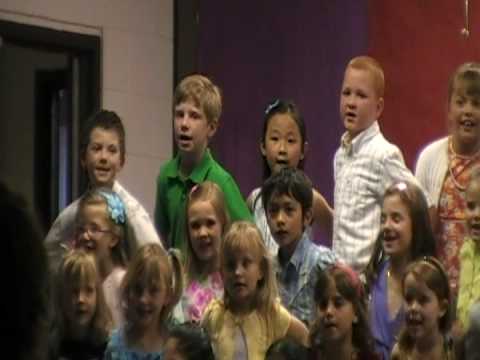
Willow Creek Elemenatry, Centennial Colorado. 1st Graders Spring Music Program. April 30, 2009.

****
Example #2 Dan Zanes and Friends- All Around the Kitchen


Dan Zanes, Uploaded on Jun 1, 2010

****
Example #3: All Around the Kitchen


dpcinva, Published on Jun 10, 2014

MPTS Kindergarten Program - June 2014

****
Example #4: Pete Seeger-All Around the Kitchen


UltimateSerge, Published on Mar 13, 2013

On American Folk, Game and Activity Songs for Children. NO COPYRIGHT INFRINGEMENT INTENDED

****
ADDENDUM: All Around the Kitchen Singalong Storybook Trailer


Music Together, Published on Nov 4, 2013

Dance "All Around the Kitchen" with a singing rooster, pots and pans, potatoes and pancakes�and see peanut butter and jelly fall in love!

****
Thanks for visiting pancocojams.

Visitor comments are welcome.
Read More

Book Excerpt About The Evolution From Group Dancing To Couples Dancing In The United States (from the book "Jazz Dance: The Story Of American Vernacular Dances" )

Book Excerpt About The Evolution From Group Dancing To Couples Dancing In The United States (from  the book "Jazz Dance: The Story Of American Vernacular Dances" )
Edited by Azizi Powell

This pancocojams post provides an excerpt from the book Jazz Dance: The Story of American Vernacular Dance by Marshall Stearns and Jean Stearns (first edition published in 1968; second edition published in 1994).

The content of this post is presented for historical, folkloric, and cultural purposes.

All copyrights remain with their owners.

Thanks to the memory of early African American dance inventors, dancers, song composers, and singers. Thanks also to Thomas W. Talley for his collection of African American folk songs and dances, and thanks to Marshall and Jean Stearns for their research and writing. And thanks to all others who are quoted in this post.

****
Click https://pancocojams.blogspot.com/2012/10/la-pas-ma-la-songs-dance.html for an earlier pancocojams post on the "Pas Ma La" dance.

Also, click https://pancocojams.blogspot.com/2017/05/square-dance-caller-researcher-phil.html for Part I of a two part series on the African influence on American square dance.

Additional pancocojams posts that are related to this post on early African American dancing can be found by clicking the tags that are given below.

Pancocojams Editor's note:
Some of the song lyrics that are found in this post are written in dialect and contain the referent that is commonly referred to as "the n word". As per the policy of this blog, that word isn't fully spelled out in this post.

Also, note that the 1968 Jazz Dance book uses either the referent "Afro-American" or "Negro" for the population now referred to as "African American". Neither "Afro-American" nor "Negro" are currently used as referents for this population.

****
Pancocojams Editor:
The Jazz Dance chapter that is partially quoted in this pancocojams post refers to the song "Jonah's Band" which is featured in Thomas W. Talley's 1922 book Negro Folk Rhymes. Here's that song (given "as is" except for an abbreviation for the "n word")

JONAH'S BAND SONG

Setch a kickin' up san'! Jonah's Ban'!

"Han's up sixteen! Circle to de right!
We's gwine to git big eatin's here to-night."

Setch a kickin' up san'! Jonah's Ban'!

"Raise yo' right foot, kick it up high,
Knock dat Mobile Buck in de eye."

Setch a kickin' up san'! Jonah's Ban'!

"Stan' up, flat foot, Jump dem Bars!
Karo back'ards lak a train o' kyars."

Setch a kickin' up san'! Jonah's Ban'!

�Dance 'round, Mistiss, show 'em de p'int;
Dat Ni**er don't know how to Coonjaint."


From https://www.gutenberg.org/files/27195/27195-h/27195-h.htm Negro Folk Rhymes: Wise and Otherwise, by Thomas W. Talley (1922), Page 1

****
BOOK EXCERPT: JAZZ DANCE: THE STORY OF AMERICAN VERNACULAR DANCES
by Marshall Stearns & Jean Stearns
From Google Books: https://books.google.com/books?isbn=0306805537; Chapter Title: The Tin Pan Alley And Song Lyrics

Page 99

"At an early date lyrics were created to go with dances. �The Dance Rhyme was derived from the dance.� wrote Thomas W. Talley in 1922

Page 100

and-as in the similar example of the Juba discussed in Chapter 4- illustrates his point with a dance called Jonah�s Band.

"First of all be it known that there is a �step� in dancing, originated by some Negro somewhere called the �Jonah�s Band step��The dancers form a circle placing two or more of their skilled dancers in the middle of it�Some dance leaders, for example simple call out in simple prose- �Dance the �Mobile Buck�, others calling for another step would rhyme their call.�

The chorus of the song consists of the repetition of the line �Setch a kickin up san�. Jonah�s Ban�!� to a Charleston rhythm at which point all the dancers execute the same step.

Before each of three choruses other steps are introduced.

"Han's up sixteen! Circle to de right!
We's gwine to git big eatin's here to-night."

"Raise yo' right foot, kick it up high,
Knock dat Mobile Buck in de eye."

"Stan' up, flat foot, [1]Jump dem Bars!
Karo back'ards lak a train o' kyars."

�Dance 'round, Mistiss, show 'em de p'int;
Dat Ni**er don't know how to Coonjaint."


The Karo and Jump Dem Bars seem to have disappeared without a trace, although the latter is self-explanatory, and a flat-footed bar-jump is typically Afro-American. Old-timers say that the Mobile Buck is an ancestor of the common Buck, which evolved into the Time Step, while the prolific Coonjaint-once a rhythmic shuffle performed by roustabouts loading riverboats and a dance observed in Congo Square-later became identified with the tune of a children�s play-party song (�I love coffee, I love tea...).

In its early folk form the dance song with instructions is a group dance performed in a circle with a few �experts� in the center-and the emphasis is on what they do. An apparently unlimited number of locally known steps are inserted and improvised upon by the experts. The entire performance is held together by the chorus of dancers forming the circle and executing the steps that gives the dance its title. The description of inserted dances is brief if it occurs at all (in the Juba, the inserted steps are merely named) and little editorializing as to its purported origin, nature, or popularity-gimmicks that became common later, when the dances were commercialized.

A transitional dance-song entitled �La Pas Ma La� (Isaac Goldberg says that phrase comes from the French pas mele*, or mixed step) was published in 1865-perhaps the dance introduced by Ernest Hogan and his Georgia Graduates as the Pasmala. As one of the early efforts to combine folk steps with topical dances of the time, the �Pas Ma La� describes its title step in the chorus

Hands on your head, let your mind roll far,

Page 101

Back, back, back, and look at the stars.
Stand up rightly, dance it brightly.
That�s the Pas Ma La.


Old-timers recall the step clearly. �It was a comedy dance,� says Walter Crumbley. �You walked forward and then hopped back three steps with your knees bent� as the directions �back, back, back� indicate. The hand on hand and mind-rolling appear to be optional variations.

The �Pas Ma La� was sometimes confused with an animal dance, which may have added to its survival, for by 1898 a song entitled �The Possum-a-la� was published, one of a series of dance-songs that popped up with titles such as �The Possum Trot� around 1910. �The Possum Trot� says Perry Bradford �was a dance which consisted of a series of fast, flat hops.� Here, the folk tradition which favored a flat-footed style, seems to have become stronger, while blending with the Tin Pan Alley version.

Again, other steps are introduced before each chorus in four verses of the �Pas Ma La�
Fus yo� say �My ni**ah get yo gun
Shoot-a dem ducks an away you run.
Now my little coon come-a and dance the shute
With the Saint-a Louis pass and Chicago Salute.


The literal direction in the first two lines in which the dancer acts out the shooting of a duck is typical of many vernacular dances and finds an analogue in a rock and roll dance of the early nineteen sixties: The Peter Gunn: emulating a fast-shooting private eye on television. The Saint Louis pass and Chicago Salute are apparently topical concoctions of Tin Pan Alley references to the World�s Fairs.

Another introductory quatrain contains references to three more dances which are better known:
Fus yo� say �My ni**ah, Bumbishay
Then turn �round and go the other way
To the World�s Fair and do the Turkey Trot
Do not dat coon tink he look very hot.


The various spellings of Bumbishay (mentioned along with the Eagle Rock, the Mooche, and Hootchy-Ma-Cootch-which is the Congo Grind- in pianist Jelly Roll Morton�s �Animule Ball�) was known in New Orleans, according to Paul Barbarin, as the �Fanny Bump�- which needs no explanation. Going to the World�s Fair was a strut (�you put both feet together and move forward on your toes� says Ida Forsyne), while the appearance of the Turkey Trot here, about fifteen years before it became a hit in New York, suggest that it came from the folk.

In spite of the atrocious dialect and Jim Crow sentiments, the lyrics of �Pas Ma La� reveal the nature of the changes taking place in the dance-

page 102
sing as it became commercialized. It is clearly no longer a group dance with improvised soloists, but rather a couple dance with fixed steps in definite order. Although the verse names new steps, and the chorus describes the main step, the aim is to sell the dance.

During the early teens and after, the dance-song with instructions multiplied rapidly, and a few, chiefly Negro composers, drew upon folk resources. These few became more influential than their numbers indicate, for although their popularity was limited at first to the Negro public, they gradually-as in the case of �Ballin The Jack�-reached a white audience. This led the way to the more enduring dances of the twenties and thirties that are often named and sometimes described in the earlier dance songs Tin Pan Alley was contributing indirectly to the surfacing of vernacular dance movements.
-snip-
*This French word was written with accent marks.

****
Thanks for visiting pancocojams.

Visitor comments are welcome.
Read More

African Influences On American Square Dance, Part II - Information & Reviews Of Phil Jamison's Book "Hoedowns, Reels, & Frolics"

African Influences On American Square Dance, Part II - Information & Reviews Of Phil Jamison's Book "Hoedowns, Reels, & Frolics"
Edited by Azizi Powell

This is Part II of a two part pancocojams series on African American influences on American square dancing and American square dance music.

This post presents information about and reviews of Phil Jamison's book Hoedowns, Reels, and Frolics: Roots and Branches of Southern Appalachian Dance. That book demonstrates the complex origins and evolution of Appalachian dance and provides information about its significant African American sources.

Part II also showcases five videos of American square dancing, with particular emphasis on "the bird in the cage" figure which Jamison indicates is one of many square dance figures (movements) that is likely of African American origin.

Click https://pancocojams.blogspot.com/2017/05/square-dance-caller-researcher-phil.html. Part I showcases a video of an interview with American square dance caller, dancer, researcher, and author Phil Jamison whose 2015 book Hoedowns, Reels, and Frolics: Roots and Branches of Southern Appalachian Dance demonstrates the complex origins and evolution of Appalachian dance and provides information about its significant African American sources.

****
The content of this post is provided for historical, folkloric, and cultural purposes.

All copyrights remain with their owners.

Thanks to the memories of early African American square dance musicians. Thanks to Phil Jamison for his research and writing about American square dancing. Thanks to all those who are quoted in this post and all those who are featured in these embedded videos. Thanks also to the publishers of these videos on YouTube.

****
SELECTED EXCERPTS OF ONLINE INFORMATION AND REVIEWS ABOUT PHIL JAMISON'S BOOK ABOUT AMERICAN SQUARE DANCING
Pancocojams Editor:
These excerpts are presented in no particular order and are numbered for referencing purposes only.

Excerpt #1
From https://www.cdss.org/images/newsletter_archives/articles/CDSS_News_fall_2015_review_hoedowns.pdf
by Tony Parkes is the author of Contra Dance Calling: A Basic Text, (Hands Four Productions, 2010)
..."Hoedowns, Reels, and Frolics is a masterpiece of a book and a milestone in dance historiography. Phil Jamison has done what many would have thought impossible not so long ago: documented the development of dance forms whose history is chiefly oral. He has laid century-old myths to rest and produced persuasive evidence of the southern dance�s multicultural origins. And he has assembled his findings in a book that is both scholarly and readable.

Jamison is perhaps the ideal person for the task: he is at home in both academia (he teaches at Warren Wilson College) and the living world of traditional music and dance. He is a caller, a dance musician, and a percussive dancer; his long and varied experience includes thirty years of performing with the Green Grass Cloggers. His love of the dance has led him to seek and find hundreds of primary documents, most of which appear to have been overlooked until now (as he points out, when he began his research �there were no scholarly books devoted to Appalachian dance�). He has also attended dance events, conducted interviews, and catalogued and analyzed nearly a hundred commercial recordings of the 1920s and 1930s. The calls on these recordings were intended to entertain the listener and are not necessarily danceable, but they provide an important window into the southern dance tradition before square dancing began to be standardized.

Jamison�s most important conclusion is that the southern dance is not, as Cecil Sharp claimed to believe, an ancient English dance form preserved nearly intact for centuries due to the isolation of mountain settlements. Rather, it draws on Scottish, Irish, French, Native American, and African traditions as well as English. Dance historians since at least the 1960s have dismissed Sharp�s theory as the product of extreme Anglophilia (and racism), but Jamison has assembled enough evidence to convince anyone. He points out that Appalachia was never as isolated as romantic writers led their readers to believe; the region enjoyed considerable trade with the rest of the world, and its settlers belonged to many ethnic groups.

Perhaps the most fascinating revelation is that the practice of calling the figures, which sets American group dancing apart from its ancestors and its cognates elsewhere, is an African-American invention. From the earliest days of non-Native settlement through the nineteenth century, most dance musicians in what is now the United States were people of color. As early as 1819, there are written accounts of black musicians calling. Jamison theorizes that the practice originated in the West Indies, the first stop in the New World for many slaves, as references to calling appear nearly simultaneously in many areas.

The bulk of the book is devoted to what can conveniently be called �square dancing,� whether done in four-couple squares, large circles, or longways sets. There are also chapters on step dancing, couple dances, and the cakewalk, as well as on the relations between dance and religion.

Appendices include an analysis of the commercial recordings, a three-part glossary, copious notes and
twenty-four pages of bibliography. A companion website, http://www.philjamison.com/, contains audio files of the recordings, along with a generous selection of paintings, photographs and videos�...

****
Excerpt #2:
From https://www.washingtonpost.com/opinions/chasing-the-rabbit-in-dc/2016/01/21/efc338cc-b8ac-1
Chasing the rabbit in D.C. By Gabriel Popkin January 22, 2016
"Roughly one Saturday night each month, government lawyers, nonprofit leaders, computer programmers, activists and creative professionals gather by the hundreds in a church in the middle of the nation�s capital and perform dance moves with names such as �duck for the oyster,� �push pa, shove ma� and �chase the rabbit, chase the squirrel.� Then they swing and promenade their partners to live fiddle music and the instructions of a dance caller...

The dance form does admittedly have some unfortunate associations to overcome, and not just because of the Virginia reels that many of us were forced to perform in gym class. Folk dance can seem fusty and arcane, and its supposed purity has led to it being appropriated at times to promote retrograde, nativistic ideologies.

But important new scholarship should put such simplistic and erroneous ideas to rest for good. Dance caller and historian Phil Jamison from Asheville, N.C., argues convincingly in his 2015 book, �Hoedowns, Reels, and Frolics: Roots and Branches of Southern Appalachian Dance,� that American square dance is not a colonial relic from the British Isles, but rather a uniquely American syncretism of European, African and Native American influences. Perhaps most surprising, Jamison found that having a dance caller prompting the steps � a practice that is integral to square dancing and numerous other �traditional� dance forms � was unheard of in Europe and seems to have its roots in the African call-and-response patterns that slaves brought to the New World.

Before calling became routine, you had to go to dance school to learn the dances. Calling made square dancing accessible to everyone, regardless of skill, experience or wealth � in other words, it made it a true folk dance. The District�s dancers, who come from all over the world and from all ages, ethnicities and walks of life, continue to benefit from this democratization today.�...

****
Excerpt #3:
From http://www.philjamison.com/hoedowns-reels-and-frolics/
Book summary:
"In Hoedowns, Reels, and Frolics, old-time musician and flatfoot dancer Phil Jamison journeys into the past and surveys the present to tell the story behind the square dances, step dances, reels, and other forms of dance practiced in southern Appalachia. He argues that these distinctive folk dances are not the unaltered jigs and reels of the early British settlers, but hybrids that developed over time by adopting and incorporating elements from other popular forms. He traces the forms from their European, African American, and Native American roots to the modern day. From the Shoo-fly Swing to the Virginia Reel, Hoedowns, Reels, and Frolics reinterprets an essential aspect of Appalachian culture.
-snip-
[Note that the cover of this book is a painting of Black musicians and Black dancers at a �frolic� (dance event)].

**
Review:
"The real complexity of American history is slowly, finally, being uncovered; Phil Jamison shines a beautifully well researched light on the birth of folk dance and music in these United States. He manages to dispel several well-worn myths in the process, and has Native and particularly African-American influences in their rightful place alongside the Anglo in the evolution of our indigenous folk traditions. The true history is far more interesting than the fantasy, and Jamison's thoughtful treatise will have you re-evaluating what you thought you knew about Square Dance--this ain't just a do-si-do in the school gym!"--Rhiannon Giddens, member of the Grammy Award�winning band Carolina Chocolate Drops"

**
Review:
"For anyone interested in the history of American square dance and clogging, Phil Jamison's book is required (and enjoyable) reading. This is by far the most ambitious and comprehensive work on the subject yet, featuring a wealth of quotations from historical sources that the author has meticulously researched as well as his own extensive firsthand knowledge of the subject. Jamison refutes some long-held myths (for example, that the Appalachian square dance is an ancient and pure form of English country dance) and brings to light heretofore overlooked historical information (such as the significant role of African American dancers, musicians, and callers). Not only does he cover a large number of pertinent subjects (from early 78 rpm recordings of regional callers, to the history of the Virginia Reel, couple dances, and cakewalks), but he presents some pointed criticism of past popularizers. There may even be a few ruffled feathers, but, to me, an important by-product of serious scholarship is to stimulate further discussion and research. Well done, Mr. Jamison!"--Bob Dalsemer, square and contra dance caller and author of West Virginia Square Dances"

**
Review:
"Appalachian dancer, dance scholar, and lover of dance Phil Jamison has crafted an artfully written, finely researched, groundbreaking, and comprehensive history of the multiple dance forms known as Appalachian dance. In dispelling myths of Appalachian isolation and whiteness, Jamison describes the transmission of dances through the vibrant commerce that flowed along the Ohio River and its tributaries�the backdoor to Appalachia�linking Pittsburgh to New Orleans and the central and southern Appalachians in between. Grounding his rich and detailed descriptions in a carefully crafted analysis of the ethnic diversity in the Southern backcountry, Jamison details the importance of European, African American, and Native American dance to the Southern square dances, social dances, and step dance traditions, as well as the contemporary dance forms popular in the twenty-first century." --Patricia Beaver, professor emerita, Appalachian State University"

****
[Added May 27, 2017]
Excerpt #4:
From http://www.citizen-times.com/story/news/local/2015/07/16/square-dancing-ethnic-think/30233181/ Square dancing is more ethnic than you think
Dale Neal, Published July 16, 2015
"The folk dancing of the Southern Appalachians wasn�t just shipped over from the British isle but developed in the melting pot of American culture, according to a new book by a Warren Wilson College professor.

�I hope to dispel some of the myths that have been longstanding for the last 100 years,� said Phil Jamison. �These dances are not just ancient Anglo-Celtic heritage that has been locked away in isolation in the mountains, but it includes multicultural and multiracial influences, and it is a continually changing tradition.�

Jamison will release �Hoedowns, Reels, and Frolics: Roots and Branches of Southern Appalachian Dance,� his highly-anticipated book examining the history of square dances, step dances, reels and other forms of dance from southern Appalachia...

Jamison, a nationally known dance caller, old-time musician and flatfoot dancer, spent 14 years researching traditional Appalachian dance and turns the table on, what he says, is the oft-told incomplete history. Jamison argues that the distinctive folk dances are not the unaltered jigs and reels of the early British settlers, but hybrids that developed over time, drawing from the European, African-American and Native American traditions.

Jamison explores the powerful influence of black culture showing how practices such as dance calling and specific steps combined with white European forms to create distinctly �American� dances.

..."Throughout the book,� Jamison said, �you find the continual exchange of culture back and forth between blacks and whites across racial lines and between social classes. There�s way more to the story that nobody has ever talked about.�

For more information about �Hoedowns, Reels, and Frolics: Roots and Branches of Southern Appalachian Dance,� visit ttp://philjamison.com."

****
SHOWCASE VIDEOS OF THE SQUARE DANCE FIGURE: THE BIRD IN THE CAGE
Example #1: Traditional Square Dance - Birdie In The Cage


RubberCrutches, Uploaded on Mar 8, 2010

Located in the Appalachian Plateau of the United States in Saegertown, Pennsylvania stands the "Wild Country Dance Hall". Local folks still dance square dancing in the old traditional square dance fashion to caller, Dan Freligh and his Digital Band, on Friday nights.

****
Example #2: Double Birdie square dance


SquareDanceHistory, Uploaded on Dec 12, 2011

Larry Edelman calls a variation of Birdie in the Cage at the Dare To Be Square weekend held November 18-20, 2011, at the John C. Campbell Folk School, Brasstown, NC.

Musicians are Steve Hickman and Jim Morrison, fiddles; Claudio Buchwald, piano; Sam Bartlett, banjo. The tune is "Butcher's Row."

The weekend was sponsored by the Folk School and by Country Dance and Song Society. It brought six well-known callers and 70 square dance enthusiasts together to explore many different styles of squares, including both traditional and modern. The organizers will post additional video clips-- watch this space!-- as well as make audio clips and a syllabus available.

This video posting is part of the Square Dance History Project. More information about us can be found here: http://www.SquareDanceHistory.org

Recorded 19 November 2011 by John-Michael Seng-Wheeler and David Millstone

****
Example #3: Dances of Jerry Goodwin 1a - Birdie in the Cage (teaching)


SquareDanceHistory, Uploaded on Dec 18, 2011

Larry Edelman led a workshop session on dances he learned from the calling of Jerry Goodwin, originally from West Virginia but living and calling in western Pennsylvania when Larry studied with him in the 1970s. Some of the dances were ones Jerry had learned from his father.

This was recorded at Dare To Be Square on November 19, 2011, at the John C. Campbell Folk School, Brasstown, NC. Additional support for the weekend, including for this videotaping by John-Michael Seng-Wheeler, was provided by Country Dance and Song Society (CDSS). The weekend brought together six well-known callers and some 70 square dance enthusiasts from around the country to explore different traditional and modern styles.

This clip shows Larry teaching the figures; you'll find a separate video with the actual dancing dancing. Each Brasstown workshop also has a sampler, with a short excerpt of each dance.

Musicians for this session were Claudio Buchwald and Steve Hickman, fiddles; Jim Morrison, guitar; and Sam Bartlett, banjo.

These videos are part of the Square Dance History Project. You can read more about us here: http://www.SquareDanceHistory.org


****
Example #4: Dances of Jerry Goodwin 1b - Birdie in the Cage


SquareDanceHistory Uploaded on Dec 18, 2011

Larry Edelman led a workshop session on dances he learned from the calling of Jerry Goodwin, originally from West Virginia but living and calling in western Pennsylvania when Larry studied with him in the 1970s. Some of the dances were ones Jerry had learned from his father. This version of Birdie in the Cage puts the active woman, and then her partner, into the center without the other dancers having to drop hands. A separate video shows Larry teaching the figure; this one shows the dancing.

This was recorded at Dare To Be Square on November 19, 2011, at the John C. Campbell Folk School, Brasstown, NC. Additional support for the weekend, including for this videotaping by John-Michael Seng-Wheeler, was provided by Country Dance and Song Society (CDSS). The weekend brought together six well-known callers and some 70 square dance enthusiasts from around the country to explore different traditional and modern styles.

In some cases, you'll find a separate video with instructions / walkthrough; in others, the teaching comes at the beginning of the clip, and in some cases you'll just see the dancing. Each Brasstown workshop also has a sampler, with a short excerpt of each dance.

Musicians for this session were Claudio Buchwald and Steve Hickman, fiddles; Jim Morrison, guitar; and Sam Bartlett, banjo. The tune is "Boil that Cabbage Down."

****
Example #5: Jerry Goodwin Calls Birdie in the Cage


Larry Edelman Published on Dec 3, 2013

Recorded at a square dance on February 7, 1987 at the Prosperity Fire Hall, Washington County, PA.
Jerry Goodwin, Caller

Mountain Express

****
This concludes Part II of this two part pancocojams series on African influences On American square dancing.

Thanks for visiting pancocojams.

Visitor comments are welcome.


Read More

Square Dance Caller & Researcher Phil Jamison's YouTube Interview: African Influences On American Square Dance" (with transcription)

Square Dance Caller & Researcher Phil Jamison's YouTube Interview: African Influences On American Square Dance" (with transcription)
Edited by Azizi Powell

This is Part I of a two part pancocojams series on African American influences on American square dancing and American square dance music.

This post showcases a video of an interview with American square dance caller, dancer, researcher, and author Phil Jamison whose 2015 book Hoedowns, Reels, and Frolics: Roots and Branches of Southern Appalachian Dance demonstrates the complex origins and evolution of Appalachian dance and provides information about its significant African American sources.

Click https://pancocojams.blogspot.com/2017/05/african-american-influences-on-american.html for Part II of this series. Part II presents information about and reviews of Phil Jamison's book.

Part II also showcases five videos of American square dancing, with particular emphasis on "the bird in the cage" figure which Jamison indicates is one of many square dance figures (movements) that is likely of African American origin.

****
The content of this post is provided for historical, folkloric, and cultural purposes.

All copyrights remain with their owners.

Thanks to the memories of early African American square dance musicians. Thanks to Phil Jamison for his research and writing about American square dancing. Thanks to all those who are associated with this interview and YouTube video.

****
SHOWCASE VIDEO: Phil Jamison 2 - African influences on American square dance


Square Dance Interviews Published on May 17, 2016

Phil Jamison discusses his research into the origins of American square dance in the south, and describes the key role that African-American musicians played . There are the well-known musical elements�the role of the banjo, for example�and Phil also points out that the first callers were African-American. Even some distinctive square dance features such as Birdie in the Cage may have African roots.

Recorded November 18, 2011, at the Dare To Be Square dance weekend, John C. Campbell Folk School, Brasstown, NC. Interview conducted by David Millstone and videotaped by John-Michael Seng-Wheeler, with financial support provided by Country Dance and Song Society. This documentation is part of the Square Dance History Project...
-snip-
Note that the title of this video interview is "African Influences On American Square Dancing" instead of "African American Influences.." The emphasis on "African influences" may be because in this interview Phil Jamisons indicates that the banjo, improvisational dancing, call and response, and imitative bird dances are central to African traditions. Also in this interview, and, presumably in his book which I've not read yet, Phil Jamison references Black fiddlers playing and calling quadrilles and other country dances in the Caribbean and not just in the American South and in other regions of the United States.

****
TRANSCRIPTION OF PHIL JAMISON's VIDEO ON AFRICAN AMERICAN INFLUENCE ON SQUARE DANCING
[Pancocojams Editor: This video provides portions of this interview. This is my unofficial transcription of these portions.. Additions and corrections are welcome.]

Phil Jamison:
�I believe that the figure �bird in the cage� is African American-originally. I can�t find any dance in the European tradition that has an individual dancer improvising within a ring and yet that is very very common in African dances. And in this country, um, all the slave dances were basically like that- a ring with an individual dancer improvising and dancing like a bird. There are-ah-various bird imitation dances that come from the African tradition.

If you look at the Southern, Southern music, we have-the main instruments, were fiddle, of Northern European, ah, brought it over. Ah but then [there�s the] African derived banjo. And the combination of the banjo, the African banjo with the European fiddle is really what made the music distinctive. And I see a similar thing with the dances and that I believe that the first dance callers were African American and that dance calling comes from African tradition. Ah, there�s a very strong tradition in African of call and response and ah all, you know, back as early as 1690, slaves were playing fiddles for white people�s dances ah before you had um ah, ah obviously before you had ah recorded music. To be ah un, to be a musician was a ah a service position and if- surely White people were playing fiddles, but slaves realized that if you knew how to play the fiddle, you wouldn�t be working in the field, but you would be playing for the dances in the big house. And not just slaves but free blacks played fiddles too, And you were in a, in a different strata.

There�s hundreds of instances that I could cite of slave fiddlers and free blacks playing the music for white people�s dances. And-think of it like this, if you�re ah un, if you�re going to have, if you are just going to have a dance in your house for your family and friends, you might play the fiddle, your music yourself. Um just like if you�re going to, ah have friends over for supper, you might cook the meal yourself. But say it�s a bigger event, like, ah ah wedding- you hire a caterer. You have somebody else do the cooking. And the same thing if it�s a public dance, or in the South, plantation balls, so obviously, the musicians were invariably black. And this is true for two hundred years. And these black musicians, ah, learned the European dance tunes so that they could play the European ah fiddle. Ah and, you know, many many slave advertisements, you know �Slave for sale, plays the fiddle really well� , ah, notes of runaway slaves �plays the fiddle�- you�d see those all the time. And ah, dancing masters owned slaves. They didn�t have a boom box- they had a slave who could provide the music for their dancing schools. And as early as the seventeen hundreds, there are references to slaves in the South doing country dances and cotillions. And the slaves didn�t go to dancing school to learn those things. And the only way they could have done them is for somebody to be prompting them.

The white people did not have-I mean I�m sure that the dancing masters may have prompting their students in the dancing school, but at a public dance, it wasn�t something you did. You learned the figures at dancing school and then you went to the ball. And ah, the very first documented dance callers were all African American musicians. The earliest I know about is about 1819 in New Orleans and ah the architect Latrobe was down there. He went to a dance and he said �This annoying musician up here is calling out the figures to the quadrilles. This is just not right. � And within a few years, in the 1820s there are other references as far North as New York state and other places in the South ah where the references to black fiddlers who were calling out the dance figures at public dances. By the 1840s, 50s there were white people doing it too. And by mid century, dance manuals are giving instruction on how to prompt quadrilles. And the dancing masters of course didn�t like it because it�s going to put them out of business. Once, once you could call the dances, dancers didn�t have to go to school anymore. And it let the dances pass, you know, just out into the countryside and they could be spread through the folk tradition. You didn�t have to have the dancing masters.

And so, what this did was to, it, it made the dances more impromptu, improvisational- which is an African dance, music and dance tradition. And it really separated them from the European tradition. And to me the, the dance calling which is African American, is the single biggest ingredient that separated, you know, made this an American dance form as opposed to a European dance form.

And there were black fiddlers in New Hampshire, in the seventeen hundreds, and un ah and there was slavery in New England, so there were slave fiddlers in New England as well as in the South. And they were playing for the dancing schools, so obviously they were�, and they were playing for the dances. Ah, they were around these dances, they- and this was happening in the Caribbean too- we talk about the Caribbean quadrilles. Same thing happened there ah where there were slaves who were doing the European country dances and quadrilles and, basically adopted that. And but the slaves were not sent to dancing schools so the only way they could do these was by prompting them, shouting out the figures at, while they are doing the dances.

[Interviewer David Millstone] - So the early calling is African Americans calling for their people

Jamison � Sure

[Interviewer] � in settings like that but then starting to call at white, at white events.

Jamison � True. And, and the reactions of the whites, in particular the visiting Europeans was that is not right, this is not the way it should be done. And the dancing masters were saying we hope this will go away soon. But it didn�t. It caught on.

And ah, and to me, that�s that�s the biggest secret about these dances. And when you think about it, it�s, it�s the African banjo is what transformed the music and made our fiddle music American, as opposed to, it�s not, is no longer British fiddle music, but it�s American. Um, and, and frankly, if you think about, if you were to list the different kinds of music that are really, truly, America, what would you think of? You�d think of jazz, blues, rock and roll, tap dance

[Interviewer] � Bluegrass

[Jamison] � Bluegrass. And they all have black influence. So, it, it made me think, well it�s, you know these square dances, we think of as American, and ah, they are an American dance form, but what makes them American and sets them apart from the European dances is the black influence.

The thing about the Black square dance calling, I know, just ah, I should say, ah, this is what I say the evidence suggests, and you know, I have no proof, but um, it, cert- I�ve done a lot of research and this is certainly what it looks like. And if someone can find an example of a white caller that precedes these black callers, I�d love to hear about it, but I, I haven�t seen it yet. You know, surely the dancing masters prompted their students, but that�s different than calling out figures, spontaneously at a dance."

****
This concludes Part I of this two part series on African American influences on American square dancing.

Thanks for visiting pancocojams.

Visitor comments are welcome.
Read More

Social Share